Learning Dutch as an Expat: 10 Hacks to Increase Your Language Learning Outside of the Classroom
As an expat in the Netherlands, learning Dutch comes with its challenges, but there are effective hacks to aid your language journey. From immersing yourself in local communities to watching Dutch news and Disney movies with subtitles, embracing these tips not only enhances your language skills but also integrates you into Dutch culture.

So You Want to Learn Dutch as an Expat
Welcome to the Dutch language – one of the most guttural languages in the world with an inverted sentence structure and two words for the english word ‘the.’ If that’s not enough to make you second guess your decision to learn Dutch, then keep reading.
I decided before moving to the Netherlands that I’d be learning Dutch as an expat. My husband’s employer had made a mistake with our UK visas and to solve it they planned to move our family to Eindhoven and have my husband travel between labs. I began learning Dutch before I left England simply because I knew it would take me much more time to learn the language than my four children.
If You’re Ready to Go to Class
As any newly arrived expat or international can tell you, arrival in the Netherlands presents so many tasks and noise that it can feel overwhelming to add learning Dutch as an expat to the mix of applying for residency cards, turning on all the utilities, navigating a new job, and figuring out what the Berenkuil is.
There are always the language course options. Places include the Volksuniversiteit Eindhoven, STE Languages, IWCE Dutch Speaking special interest group, Taalcafé at Eindhoven Bibliotheek, Una Paloma Blanca, and the Language Institute Regina Coeli, among many other options. But what do you do when you can’t get to class? Don’t sweat it – I have some tips for you.
If You’re Ready to Learn at Your Own Pace
After arriving in the Netherlands, one of the biggest things that stands out is the language. In order to learn a language, you need to be able to hear, speak, write, and read in your chosen language. And you can expect to develop at different rates in all of these categories.
1. Buy a home in an area with less expats
Learning Dutch as an expat requires a comprehensive and conscious approach. One of the best ways to immerse yourself in the Dutch language is to put yourself in a position you will much more likely need to know it. And one way to do that is to buy a home in an area with a higher proportion of Dutch people to internationals. Think, for example, how much more Dutch you are likely to use living in a relatively small village near Eindhoven than you are in locations around ASML. You’ll also get to know more about local traditions which will give context and depth to your language learning experience.
One thing you should know when closing the sale of on your home is that if you are not a native Dutch speaker, you are required by law to have a translator present. This is to ensure that you understand all the proceedings around the sale of the home and it is to give you equal representation in the sale of the home.
In the purchase of a home, buyers are the ones who choose the notary for closing the sale of the home and they are responsible to pay the translator fees. There are many ways to go about this. With the Xpat Agent’s preferred provider program, for example, our preferred notary waives the translator fee when you book your closing with them.
Interested in learning more about unmissable factors when buying a home in Eindhoven? Read 7 Important Expat Considerations When Buying A Home in Eindhoven

2. Watch Jeugdjournaal with subtitles
One thing the Dutch love is news. They love it so much that children have their own nightly news program called the Jeugdjournaal. This program reports news in a format that’s relevant and understandable for children. Its short, its direct, and its relevant to the world around you. If you watch or read the Jeugdjournaal, you will improve your Dutch.
Want to take your learning a step further? Don’t miss the Sinterklaasjournaal, a news program about Sinterklaas’s yearly arrival in the Netherlands, running in November and December. Then you can dive deep into the lore and tradition surrounding Sinterklaas whilst also learning the latest jokes and improving your Dutch.
Learning Dutch as an expat doesn’t have to be dry or boring, and it certainly doesn’t have to be forced. Finding ways to use local resources like the Jeugdjournaal will help you on your quest to conquer the Dutch language.
3. Use DuoLingo
Duolingo is a free language learning app that you can use to improve your Dutch language skills. Whilst not a replacement for other language learning exercises, it is an excellent supporting tool when you’re already immersed in the language.
I’ve personally used Duolingo to strengthen my Dutch learning for years, and I’ve seen it steady improve and become more in depth over time. Sometimes that elicited a bit of frustration from me when I was nearing the end of my Duolingo language goals, but overall the support and steady support built over daily use for years has only improved my Dutch.
4. Change your phone language settings to Dutch
Are you ready for something harder? Try changing your phone’s language setting to Dutch. This does guarantee a period of confusion when you pick up your phone to respond to a melding or you’ve missed an oproep, but you must weigh that with the advantages of improved language learning.
Remember, you can always switch the language back to your native language if you need to. But if you are interested in learning Dutch as an expat and it’s a good time for you to try switching your phone’s primary language setting, do give it a go.
5. Volunteer in the community or join a club
Want to meet people in your community who’ll help support your language learning journey? Try joining a club of interest to you or volunteering in the community. I understand there are many clubs organised with expats and internationals in mind. And those are very good and often very comfortable places.
But if you want to learn the language, pick a place where English isn’t the main language and take a step outside of your comfort zone. Not only does this help you learn Dutch, but it helps enrich the community with your perspective, your experience, and your skills.
I’ve volunteered as a photographer for the local animal shelter, Rozeindhoven, since November 2022. Not only do I love the people I volunteer with, but I get to help animals find permanent homes.
6. Wear a ‘praat Nederlands met mij,’ button
There are many initiatives around the country where you can get (or buy!) a button to pin to your clothes that says ‘praat Nederlands met me,’ or ‘spreek Nederlands met me.’ In this way, you can ask the people around you to lend a supportive hand when you are learning Dutch as an expat – essentially reminding others that you are learning Dutch and you’d rather they speak Dutch with you.
Many expats and internationals find that as they try to learn Dutch, others continue to speak English with them because its simpler, sounds helpful, or is more direct. Unfortunately this also undermines their best efforts to learn Dutch! The Holland Expat Center South is now giving out ‘Praat Nederlands met me,’ buttons in their welcome packets, and handing them out at events.
They also offer free buttons for those who are learning Dutch. All you have to do is stop by their offices to pick one up. (Succeed Offices, 3rd Floor – Stadhuisplein 10, Eindhoven)


7. Make friends with a Dutch person
When learning Dutch as an expat, if you truly want to learn to speak Dutch well you need to find a native Dutch speaker to talk with. They can help you with your pronunciation, and if they’re fluent in your native language, they can also help you find the words you’re looking for in conversation when you are still learning to express yourself in Dutch.
When we first arrived in the Netherlands, we made friends with an elderly Dutch lady who could speak many different languages. Shortly after that, she became ill and had to move into a care home permanently. She was very sad about this, but I told her I needed help learning Dutch and asked if I could visit her weekly with my two youngest children on Wednesday afternoons. This made her happy because she had someone who needed her.
Another friend and I would take long walks in the countryside around our village, talking as we went. In the beginning I found it hard to always understand the conversation, but after several months of walks, my conversation skills improved.
Tips for making Dutch friends: find someone with whom you share something in common. Give them plenty of time to get to know you without demanding too much of their time and attention. Bring treats to the neighbourhood picnics or gatherings, and be ready to help out in the way you’d want to be helped. Share about yourself but don’t overshare.
8. Read Donald Duck and other comics
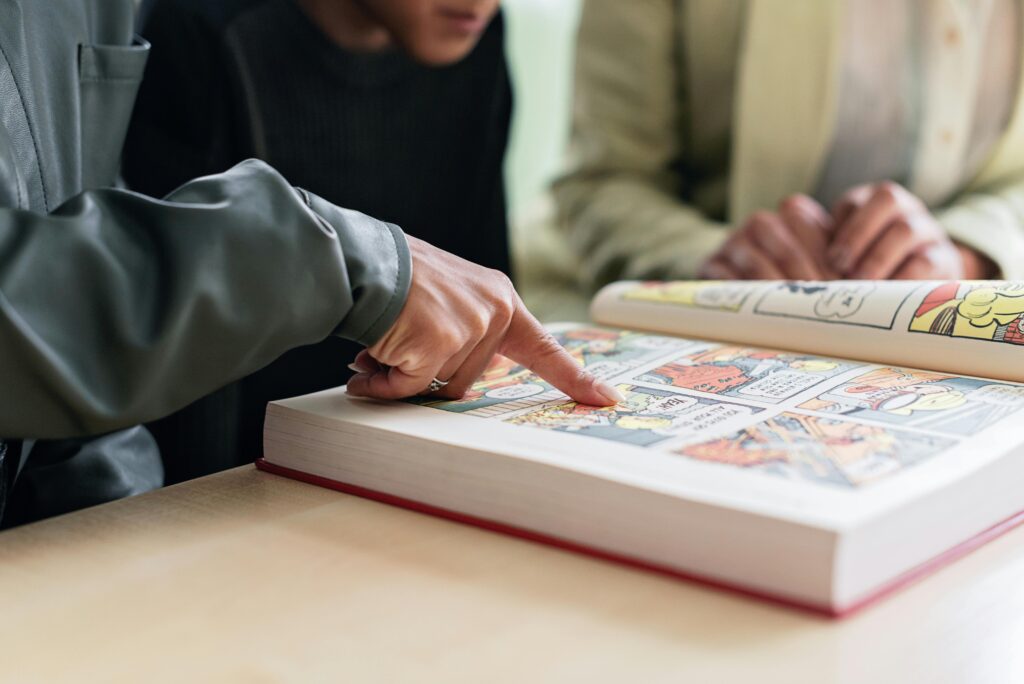
I think I can thank the Donald Duck comics for singlehandedly creating interest in the Dutch language in my four children. The Donald Duck comic strip is a big deal in here in the Netherlands. You can buy books at just about any store, and you can have a subscription to a weekly comic delivered to your home. Not only that, but because it combines simple language with images whilst also exploring social norms, history, and culture in a humorous way, it makes learning Dutch as an expat engaging and interesting. And if we keep learning engaging and interesting, we keep learning!
Often if there are more complex words or ideas, these are accompanied by an explanation. And you can even learn to type with Donald Duck! Needless to say, the benefits of reading Donald Duck aren’t limited to children learning Dutch. Anyone can have a laugh and improve their Dutch with Donald Duck!

9. Try iTalki
When I first realised our next move would likely be to the Netherlands, I already realised the value of integrating linguistically into the culture we lived in. We’d just acclimatised to rural England, where my children had learnt to use different spelling and words to express themselves at school. So it was not a question of whether we’d learn Dutch. Rather, it was the question of how would I would be learning Dutch as an expat.
Realising I’d never learn Dutch as quickly as, say, my five year old at the time, I decided to find a tutor. Dutch wasn’t exactly a common language request for learning, either. I recall scouring the shelves at Waterstones for *any* books in Dutch and only being about to find a pocket sized travel guide.
So naturally, I googled how to learn a language and I discovered a website called iTalki. iTalki is a website that puts language learners of more than 150 languages in touch with teachers or community tutors all around the world who teach them through online meetings.
As a language learner, you choose your target language, the intensity, the time of day that you learn, and your tutor. You also determine if you want 1 on 1 lessons, group lessons, or more. For me, having a weekly Skype videochat with my Belgian tutor living in Portugal became the routine before I moved to the Netherlands. And it provided an excellent foundation in a language I’d never heard spoken until I decided to learn it.
And I will say that one time, I was so slow making progress in learning Dutch that my instructor Robrecht complimented me on how I kept showing up for lessons. I’ve come a long way since then, and you will make considerable progress too, when you decide to keep going.
10. Watch Disney movies in Dutch with subtitles on
Learning Dutch as an expat is a bit like returning to childhood, so why not make the most of it and enjoy your Disney favourites again?! By watching a familiar movie where you already know the storyline and dialogue, but listening to it in Dutch with subtitles in Dutch on the screen, you can give your language learning a boost you wouldn’t imagine was possible.
Your brain is able to associate the new words you are learning with the storyline, because it’s pairing the new information with what it already knows. If you’re able to make links when you learn between new information and what you already can sing by heart, then your brain can more easily permanently store the new information.
Add reading the subtitles in Dutch, and you’re strengthening your language skills on several fronts simultaneously.
We discovered this a bit by chance with my children on a road trip from England to the Netherlands during our Easter break. Knowing that if we forced Dutch learning on the children it would backfire spectacularly, I bought Moana in Dutch (Vaiana, for those that want to know) as a child-friendly language learning opportunity , and the children watched it for hours in the car.
Not only were the children occupied, but my brain also tuned in to hear the words, the rhythmic staccato of the Dutch language, and how sentences are grammatically formed.
Actually, it doesn’t have to be a Disney film. Use any kind of film that’s been translated to Dutch where you already know the plot and dialogue. Watch it with Dutch subtitles on. Your language learning brain will thank you.

Bonus: Put your children in local Dutch schools
Now this is a bonus hack because it comes with a few caveats. The first being that you need to have children to enroll them in Dutch schools. The second is that if you plan to live in the Netherlands for only a couple of years, your children do not need the considerable added stress of learning a whole new language on top of their recent international move.
Learning Dutch as an expat is easier for children than it is for adults. But that does not take into account that international moves are stressful for children at an age when they’re still trying to make sense of the world around them. Parents also have considerable stress when moving and living in a culture where they don’t speak the language. Add to that the fact that in order to fluently function in a language themselves, children need more time than two to three years of language exposure and you’ll understand why I recommend other educational options if you’re only here for a short time.
If you want your child simultaneously learning their native language, look for resources at the Heritage Language Education Network.
But consider you’re here for an extended period of time and you have school age children. If you want to be fluent in Dutch and you want them to adequately learn Dutch, put them in Dutch schools. Imagine for a minute all the school newsletters, the school report cards, emails, and rest of the plethora of communication that comes from schools – all coming home to you in Dutch.
There’s nothing quite like a Dutch school experience to fully immerse yourself and your family in the Dutch language. And there’s nobody quite like Dutch school teachers who will cheer you all on as you progress in your language learning skills.
Not only that, but by enrolling in Dutch schools you will better know your Dutch neighbours. Your child or children will make friends, and want to ‘afspreken,’ after school. Or you’ll meet other parents on the school grounds or get to volunteer in the classroom. Any way you look at it, you’ll be using, understanding, and learning Dutch as an expat in no time!
Tip from the makelaar: Listen to the music of Andre Hazes
Mathijs Metselaars, real estate agent & owner at the Xpat Agent, also recommends listening to Dutch singers like Andre Hazes. He sings classics you’ll hear belted out at Dutch events, like ‘Bloed, Zweet, en Tranen,’ (Blood, Sweat, and Tears), and sings from an everyman’s perspective using simple sentence structure and wording that makes learning Dutch as an expat through music easier.
So there you have it- plenty of hacks, tips, and insight picked up from my journey learning Dutch as an expat in Eindhoven. By making small changes, embracing learning on all fronts, deliberately choosing where I live, stepping outside of my comfort zone, and even getting comfortable making embarrassing mistakes, I’ve been able to re-enter a comfortable space where I know what the people around me are saying and where the language sounds like home.
At the end of the day, that’s what we really want. We want to feel like we are at home. And while learning Dutch as an expat might seem challenging or too much investment in the beginning, I wholeheartedly believe it is worth the effort.